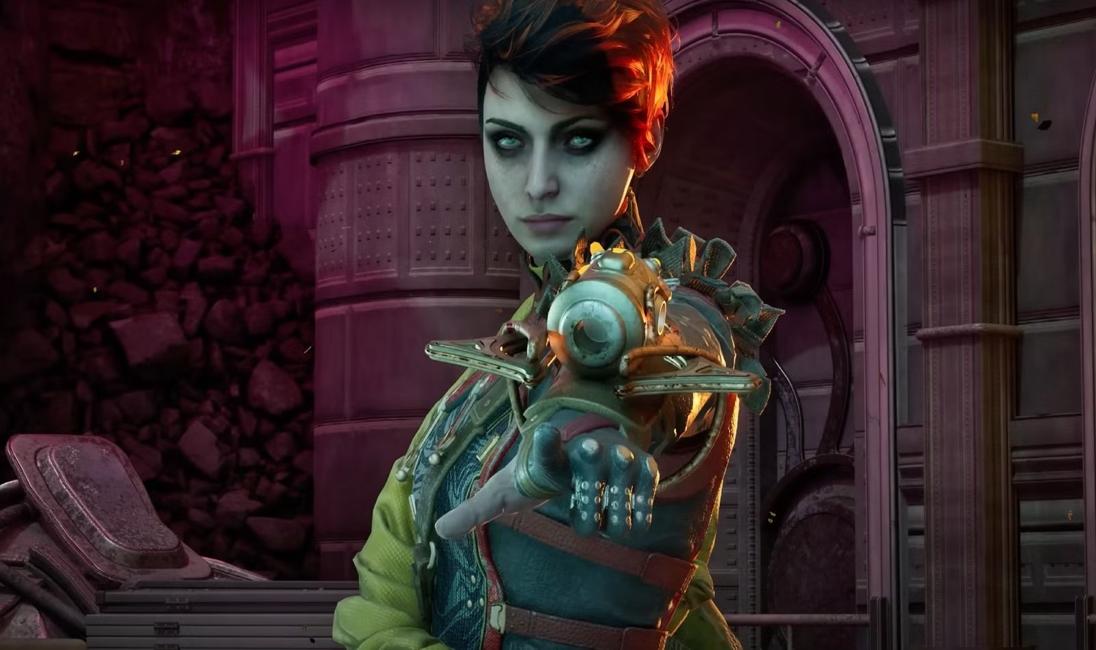
Look, I know it sounds bad. Maybe even a little…evil? But hear me out. In video games, especially RPGs like Outer Worlds 2, I'm not just playing to be a hero. Sometimes, I want the delicious drama of betrayal. I want my carefully cultivated alliances to crumble into dust. I want the gut-wrenching feeling of being stabbed in the back by someone I trusted. Is that so wrong?
Okay, maybe a little wrong. But think about it: isn't the potential for betrayal what makes alliances interesting in the first place? If I know my companions are ride-or-die, unconditionally loyal, things get boring pretty fast. Where's the tension? Where's the edge-of-your-seat suspense? Give me companions with their own agendas, their own secrets, their own breaking points. Give me the kind of characters who make me constantly second-guess their motives. That's good storytelling.
And let's be honest, the first Outer Worlds was…well, it was good. Solid. But the companion stories, while charming, often felt a little too safe. Too predictable. They were all a bit too eager to please. I ended up feeling like I was babysitting a bunch of well-meaning but ultimately bland sidekicks. Which, no offense to Parvati and the gang, just wasn't what I was hoping for.
Why Trust Issues Make Better Gameplay
So, what am I really asking for in Outer Worlds 2? I'm asking for complexity. I'm asking for characters who feel like real people, with all the flaws and contradictions that entails. And real people, sometimes, betray each other. Think about it this way: If everyone is trustworthy, nobody is interesting. I want companions who are capable of making difficult choices, even if those choices hurt me.
But it’s not just about the drama (though, let's be real, the drama is a big part of it). A well-executed betrayal can add layers of meaning to the game's story, forcing you to re-evaluate your own decisions and allegiances. Consider the impact of a character turning against you. Suddenly, you're not just fighting enemies; you're dealing with the emotional fallout of a broken trust. That's powerful stuff.
Plus, it forces you to pay attention. To really listen to what your companions are saying. To notice the subtle shifts in their behavior. To be constantly vigilant. Which, in a dangerous world filled with corporate conspiracies and mutated creatures, seems like a pretty reasonable survival strategy.
The Art of the Double-Cross: How to Nail a Betrayal
Now, there's a right way and a wrong way to do a betrayal. The wrong way is to have it come out of nowhere, feeling arbitrary or unearned. That's just lazy writing. The right way is to lay the groundwork carefully, dropping hints and foreshadowing along the way. Plant the seeds of doubt early, so that when the betrayal finally comes, it feels both shocking and inevitable. The satisfying kind, you know?
Think about the classic examples. Think about the characters who turned on you in other games, the ones that really stuck with you. What made those betrayals so effective? Was it the slow burn of suspicion? The devastating emotional impact? Or the way it completely changed your perception of the story? All of the above, probably.
And it's not just about shocking the player. It's about exploring the themes of loyalty, ambition, and the corrupting influence of power. Game developers, need to make betrayals more than just plot twists; it need to be character moments that reveal something profound about the world and the people who inhabit it.
Actually, that's not quite right. The best betrayals, the ones that really stick with you, are the ones that make you question everything. The ones that force you to confront uncomfortable truths about yourself and your own choices.
Beyond Good and Evil (Companions)
The frustrating thing about this is that, in a game that's all about shades of grey and moral ambiguity, The Outer Worlds played it a little too safe. It hinted at the potential for deeper, darker character arcs, but rarely followed through. I hope Outer Worlds 2 embraces the chaos and uncertainty that makes RPGs so compelling.
Look, I'm not saying I want every companion to turn on me. That would be exhausting, and frankly, a little predictable. But I want the possibility to be there. I want to know that my choices have real consequences, and that my alliances are built on something more than just shared interests.
Give me companions with secrets. Give me companions with conflicting loyalties. Give me companions who are willing to cross the line for what they believe in, even if it means betraying me. In other words, give me companions who are actually interesting.
You might be wondering, “Isn’t that kind of cynical?” Maybe. But here’s the thing: I think it’s more realistic. People are complicated. They have their own motivations, their own desires, their own flaws. And sometimes, those flaws lead them down a dark path. It makes them more realistic.
And speaking of realism, let's not forget the importance of a compelling motive. A betrayal should never feel random or arbitrary. It should be driven by something tangible, something that makes sense within the context of the story. Maybe a character is driven by greed, or revenge, or a desperate desire to protect their loved ones. Whatever it is, it needs to be believable. Otherwise, it just feels like a cheap plot device.
But, here's the thing: if Outer Worlds 2 can deliver on this promise, if it can give us companions who are truly complex and unpredictable, then I think we're in for something special. Something that will challenge our assumptions, test our loyalties, and leave us questioning everything we thought we knew.
FAQ: The Dark Side of Companionship
Why would I want my companions to betray me in Outer Worlds 2?
It's not about wanting betrayal for its own sake, but about wanting depth and realism in character interactions. The potential for betrayal creates tension, forces you to pay attention to companion motivations, and makes the game's world feel more dangerous and unpredictable. It's about making alliances meaningful.
How do I know if a companion in Outer Worlds 2 is going to betray me?
That's the point - you shouldn't know for sure! But look for subtle hints. Do they have conflicting loyalties? Are they secretive about their past? Do their actions sometimes contradict their words? Trust your instincts. Of course, even the most careful player can be surprised.
Isn't it frustrating to have a companion betray you?
It can be! But frustration can be a good thing. It means you're invested in the story and the characters. Plus, overcoming betrayal can be incredibly rewarding, leading to unique gameplay opportunities and story outcomes. It's all part of the experience.
Does wanting betrayals make me a bad person?
Absolutely not! It just means you appreciate nuanced storytelling and complex characters. Besides, it's just a game! You're not actually betraying anyone in real life (hopefully).
How can Obsidian Entertainment make betrayals work well in Outer Worlds 2?
By laying the groundwork early, providing compelling motives, and making the consequences of betrayal meaningful. The betrayal should feel like a natural extension of the character's personality and the game's overall narrative. And it shouldn't come out of nowhere!